

Special Bearings


Coupling Integrated Bearing
BOM designs and manufactures the Coupling Integrated Bearing, a precision unit where the coupling interface (splines, keyways, flanges, or threaded features) is machined directly into the bearing inner ring rather than attached as a separate component. This eliminates the misalignment introduced by press-fitting or keying a separate coupling, while reducing axial length and component count. Custom inner ring wall thickness enables higher load capacity within the same envelope. Adopted across industrial automation, sewing and textile machinery, conveyor systems, and precision spindle applications.
Key Advantages
-
Coupling Interface Machined into Bearing Inner Ring
-
Zero Press-Fit Misalignment for Precise Shaft Coupling
-
Reduced Axial Length and Weight vs. Separate Coupling
-
Custom Wall Thickness for Higher Load Capacity
-
Multiple Interface Types: Splines, Keyways, Flanges, Threads
-
Engineering Collaboration Available: Custom Variants Designed from Your Application Constraints
Product Inquiry
Product Category
Speak To One of Our Experts
Name can't be empty
Email error!
Message can't be empty
Send message
*We respect your confidentiality and all information are protected.
Description
Reviews
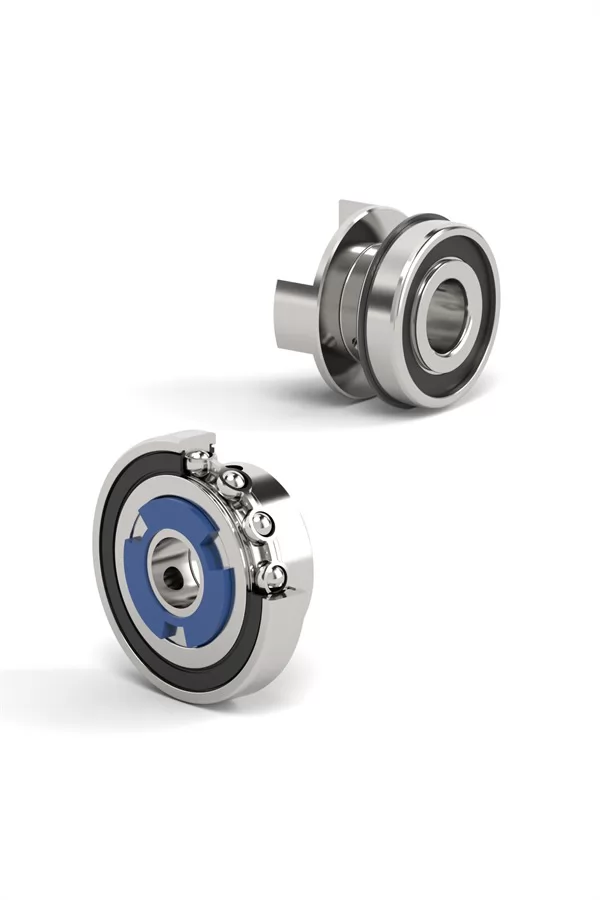
Coupling Integrated Bearing
Integrated Design 30%+ Load Increase Precise Shaft Alignment
A coupling integrated bearing (shaft coupling bearing) is a custom-engineered unit in which the coupling interface (keyway, spline, or bolt flange) is machined directly into the bearing inner ring, eliminating the separate coupling component, removing assembly tolerance stack-up, and enabling larger rolling elements for 30% or more higher load capacity than a conventional bearing-plus-coupling assembly.
- Integration: coupling interface machined into bearing inner ring
- Load Gain: ≥30% higher vs. conventional assembly
- Shaft Alignment: coupling and raceway share a common axis, with no press-fit eccentricity
- Connection Options: keyway / spline / bolt flange, fully customizable
- Applications: industrial automation, sewing machinery, textile equipment
The Challenge: Bearing + Coupling Assembly
In applications where a bearing supports a shaft that must also be mechanically coupled to another shaft or component, the conventional approach is to press or key a separate coupling onto the bearing inner ring. This layered assembly introduces cumulative tolerance errors, adds axial length and weight, and imposes structural limitations on load capacity. The question is whether the coupling function can be absorbed into the bearing itself, eliminating the separate component entirely.
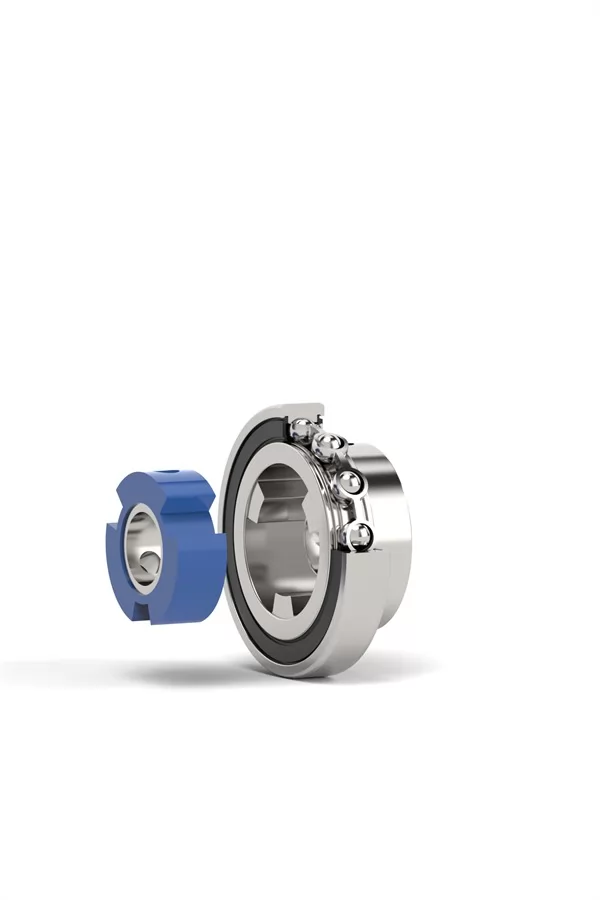
Shaft Misalignment Begins at the Coupling Interface
When a coupling is press-fitted or keyed onto a bearing inner ring as a separate component, the tolerance between the two parts introduces a small but significant eccentricity. In precision-motion applications such as high-speed spindles, servo-driven axes, and textile machinery, even a few micrometers of misalignment translates to elevated vibration, accelerated seal wear, and reduced system accuracy.
The coupling integrated bearing machines the coupling interface directly into the inner ring in a single machining setup. The coupling axis and bearing axis are identical by construction, eliminating the eccentricity that a separately pressed coupling inevitably introduces. The result is more precise shaft-to-shaft alignment, reduced vibration, and longer service life for connected shafts and seals.
Separate Coupling Adds Axial Length and Weight
A conventional shaft coupling occupies additional axial space on the shaft, increasing the bearing span and the cantilevered length of the shaft. Longer shaft spans increase deflection under radial load, raise bearing reaction forces, and ultimately reduce the achievable speed and load rating of the drivetrain. Every millimeter of unnecessary axial length has a measurable cost to system performance.
By integrating the coupling function into the bearing inner ring, we eliminate one complete component from the drivetrain assembly. The axial space previously occupied by the coupling hub is recovered, producing a measurably shorter and lighter unit. In compact machine designs where shaft envelopes are tightly constrained, this reduction in axial length directly enables shorter machine frames and lighter rotating assemblies.
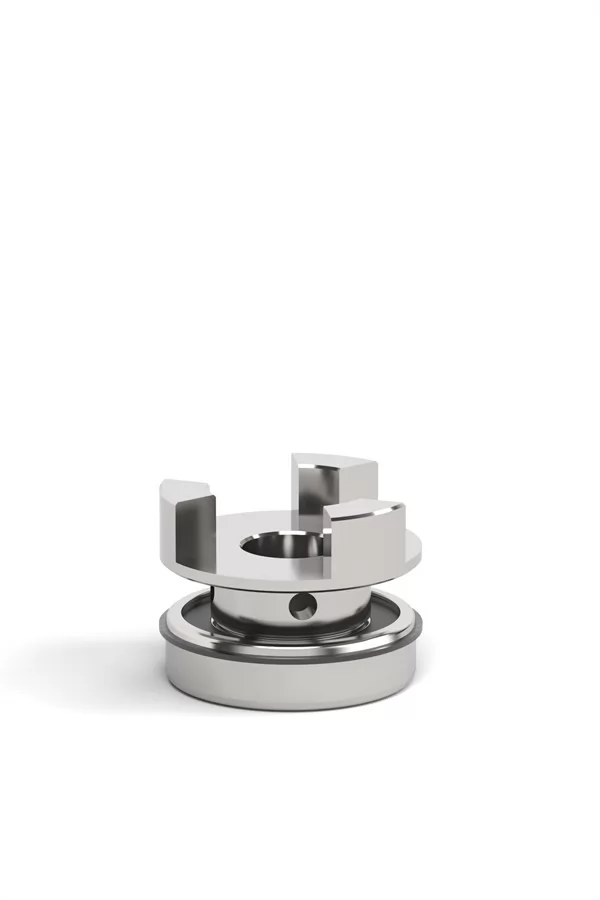
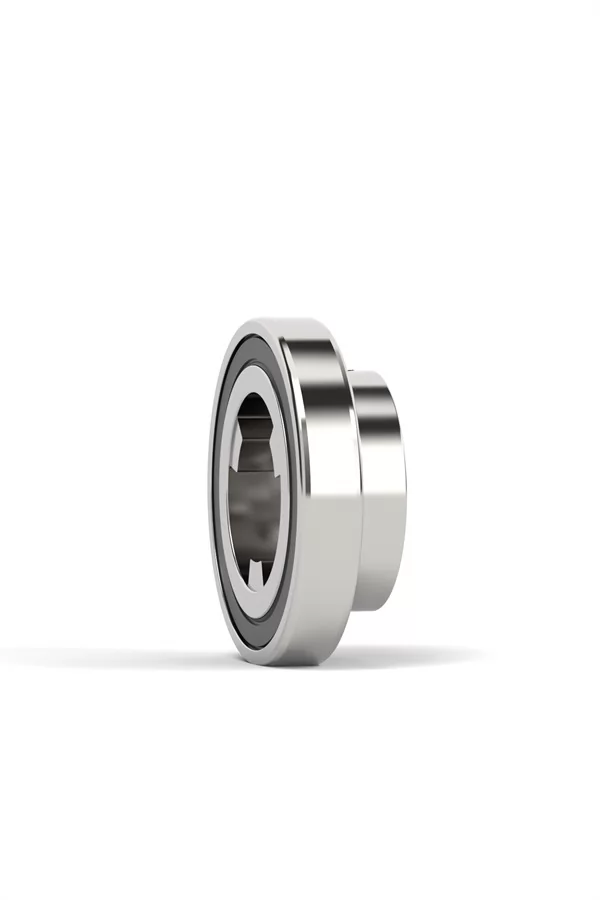
Load Limited by Standard Inner Ring Wall Thickness
When a coupling is pressed over a standard bearing inner ring, the ring wall must remain thin enough to accommodate the coupling bore while retaining adequate structural stiffness. This constrains the maximum rolling element diameter and the achievable load rating, forcing engineers to either accept reduced load capacity or step up to a larger bearing series that requires housing and shaft redesign.
Without the press-fit constraint of a separate coupling, we are free to design the inner ring wall to the optimal thickness for the application and select larger rolling elements accordingly. This yields a ≥30% increase in dynamic load rating within the same bore-and-outside-diameter envelope, directly supporting higher transmitted torques and longer bearing service intervals.
Applications
Industrial Automation
Automated drives and servo-controlled axes require precise shaft coupling with minimal misalignment. The coupling integrated bearing reduces the number of interfaces between motor shaft and load, improving positioning accuracy and extending seal and bearing service life.
Sewing & Textile Machinery
High-speed sewing and embroidery machines operate at sustained RPM with tightly coupled drive shafts. The integrated design eliminates the separate coupling hub, reducing axial length, lowering vibration, and enabling higher shaft speeds within the same mechanical envelope.
Conveyor & Drive Systems
Power transmission drives connect motor shafts to rollers, drums, and gearboxes through multiple coupling interfaces. Integrating the coupling into the bearing reduces alignment error at each interface, lowering the accumulated misalignment that causes premature bearing and seal failure.
Precision Spindles & Rotary Tables
Applications demanding sub-micron runout and precise torque transmission benefit directly from eliminating the press-fit coupling interface. The coupling integrated bearing provides a single, precision-machined axis for both support and connection.
About BOM Bearing
BOM Bearing designs and manufactures custom-integrated bearing solutions for applications where standard bearings reach their limits. Certified to ISO 9001, IATF 16949, and ISO 14001.
- Certified Quality Management: ISO 9001, IATF 16949, and ISO 14001, meeting the rigorous quality standards required by demanding global OEM supply chains
- Engineering from Your Requirements: Share your current bearing setup and performance targets. Our engineering team works from your constraints, not from catalog limitations
- Technical Partnership: End-to-end engineering support, from analysis of your existing assembly through design, prototyping, and production
- Trusted by Industry Leaders: Custom integrated bearings adopted by global market leaders across industrial automation, robotics, and transportation & logistics
_1770101839_WNo_400d600.webp)
Frequently Asked Questions (FAQ)
What types of coupling interfaces can you integrate into a bearing?
We support keyway (parallel key, Woodruff key), spline (involute spline, straight spline), and bolt flange interfaces. The coupling geometry is fully customized to your shaft and torque requirements. Contact us with your drawings and we will confirm feasibility and provide a detailed quotation.
How does the integrated design improve shaft alignment compared to a conventional coupling?
A conventional press-fitted or keyed coupling introduces eccentricity between the coupling bore and the bearing bore, typically several micrometers depending on fit tolerances. The integrated design machines both interfaces in a single setup, making concentricity a function of machine tool accuracy rather than assembly tolerance stack-up, typically an order-of-magnitude improvement in shaft-to-shaft alignment.
How does the coupling integrated bearing maintain alignment precision under operating loads?
Because the bearing raceway and coupling interface are machined in a single setup, the coaxiality between the two is set by one machining operation rather than by the cumulative tolerance of a separately pressed or bolted coupling. This gives the integrated design inherently tighter shaft-to-shaft alignment than a conventional bearing-plus-coupling assembly, a critical advantage in servo-driven axes, precision spindles, and encoder-coupled shafts where angular deviation directly affects output accuracy. For systems with known angular or parallel offset between input and output shafts, our engineering team can incorporate compensating geometry into the integrated design to handle the specific misalignment magnitude.
What information do I need to provide to get a custom coupling integrated bearing designed?
We need three things: your current bearing part number or dimensional drawing, the shaft coupling geometry (keyway dimensions, spline specification, or bolt pattern), and your load and speed requirements. From that, our engineering team designs the integrated unit and prepares a proposal with no complex qualification process required. Share your drawings and we will take it from there.
What if my coupling interface or shaft configuration differs from your existing designs?
Every Coupling Integrated Bearing is engineered from your application constraints, not from a catalog. Share your shaft diameters, torque requirements, alignment conditions, and space envelope, and our engineering team designs from there. Coupling geometry, ring cross-section, rolling element arrangement, material selection, and surface treatment are all within the design scope.
0 Comments
Share your thoughts
Showing 6
of 0
reviews
Your rating
Your review *
Your Name *
Enter your Name
Your Email *
Enter your Email
Submit
Contact Us
Get in Touch with Us
Name can't be empty
Email error!
Message can't be empty
error
Send Your Message